
Table of Contents
24/7 Elevator Repair Hyderabad | Emergency Lift Callout Service
When a high-velocity passenger elevator or a heavy industrial lift fails within a high-density urban core, it creates an immediate infrastructural and operational crisis. In major commercial networks and residential micro-markets, elevators are the primary transport link for vertical movement. A sudden mechanical or electrical shutdown is not simply a minor issue—it can halt business activity, strand residents, and expose building owners to serious legal liability if backup safety systems fail.
Managing unexpected elevator shutdowns requires access to a certified, round-the-clock service network. Securing a professional partner for 24/7 elevator repair in Hyderabad ensures that facility managers, building supervisors, and apartment boards can deploy specialized engineering support at any hour of the day or night. Modern elevators use complex cyber-physical networks that require specialized diagnostic equipment, high-voltage electrical safety knowledge, and precise mechanical alignment skills.
This engineering manual outlines the emergency fault-isolation tracks, structural troubleshooting steps, and safety procedures executed by certified 24/7 field service technicians to safely restore vertical transit systems.
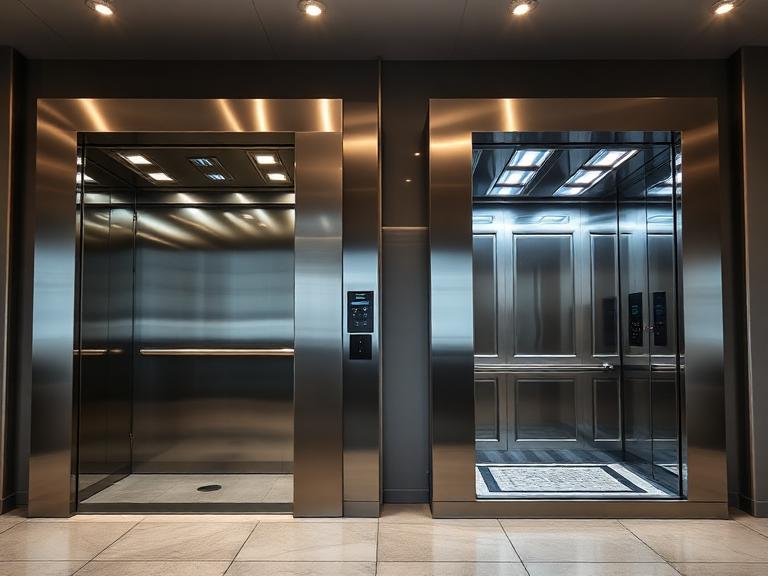
1. Categorizing Critical Nighttime & Peak-Hour System Faults
Emergency field engineers categorize system failures into distinct technical areas. This structured approach helps narrow down the search field and ensures technicians select the right tools before entering the elevator shaft or machine room.
A. Intermittent Controller Area Network (CAN-Bus) Interruptions
Modern elevator networks rely on high-speed CAN-bus serial lines to transmit real-time data between the main controller panel, the car operating panel (COP), and individual floor indicators.
- The Problem: Continuous bending and twisting can cause internal copper strands within the flexible traveling cables to fracture, leading to intermittent signal drops. High-voltage power cables running parallel to communication lines without proper shielding can also induce significant electromagnetic interference (EMI).
- The Diagnostic Path: The technician connects a portable digital storage oscilloscope to the CAN-H and CAN-L signal lines. They look for jagged waveform profiles or voltage reflections that point to loose wire terminations, bad grounding links, or water damage inside a junction box.
B. Solid-State Drive Overheating and Component Failure
Variable Voltage Variable Frequency (VVVF) inverter drives handle intense electrical and thermal loads during peak traffic or hot summer days.
- The Problem: If an electronics cooling fan fails or a ventilation filter becomes clogged, internal temperatures inside the enclosure can spike past $50^\circ\text{C}$. This extreme heat causes the insulated-gate bipolar transistor (IGBT) power modules to execute an emergency thermal shutdown to protect the system from burning out.
- The Diagnostic Path: The 24/7 repair technician uses a calibrated thermal imaging camera to scan the circuit boards. This helps them instantly isolate overheated components, check internal capacitors for swelling, and verify that incoming line voltage reads a stable $415\text{V}\text{ AC} \pm 10\%$.
2. Emergency Passenger Evacuation and Manual Extraction Protocols
If an elevator breakdown traps passengers inside the cabin, field crews prioritize passenger extraction above all else. Technicians follow a strict, step-by-step mechanical safety sequence to perform a manual rescue without risking injury.
1.Main Incoming Utility Power Isolation (LOTO):Phase I.
The response technician enters the machine room or controller area and immediately switches off the main 3-phase power breaker. They apply a physical lockout padlock and warning tag to guarantee the system cannot restart automatically while manual rescue work is underway.
2.Establish Intercom Communication and Passenger Reassurance:Phase II.
The technician uses the cabin intercom or stands near the hoistway doors closest to the stalled car to speak with the passengers. They reassure the occupants, instruct them to stand back from the doors, and confirm that no medical emergencies require immediate emergency services.
3.Determine Exact Cabin Location inside the Shaft:Phase III.
The technician checks the digital controller screen or matches the painted floor-level marks on the steel hoisting cables with the stationary reference indicators on the machine bedplate. This step confirms the car’s position relative to the closest building landing floor.
4.Controlled Manual Brake Disengagement (Drifting):Phase IV.
Using a dedicated mechanical brake release lever provided by the manufacturer, the technician opens the motor brake calipers in short, controlled bursts. Gravity pulls the heavier assembly—either the car or the counterweight—allowing the cabin to drift slowly toward the nearest floor landing.
5.Verify Perfect Floor Level Alignment:Phase V.
The technician drifts the car slowly until the cable marks or diagnostic indicators confirm the cabin floor is perfectly flush with the building’s landing sill. They release the brake lever to lock the car firmly in place before attempting to open any doors.
6.Engage Emergency Landing Door Release Key:Phase VI.
The engineer inserts a specialized tri-lobe or double-pin emergency drop key into the safety release hole on the landing door panel. They turn the key to mechanically release the interlock mechanism, slide the landing and cabin doors open by hand, and assist the passengers out safely.
3. Systematic Electrical Safety String Troubleshooting
Once the passengers are safe, the 24/7 repair technician focuses on finding and fixing the underlying electrical or mechanical failure. The first step is testing the elevator’s safety string.
The safety string is a continuous electrical circuit that connects every mechanical safety switch in series using low-voltage DC lines. If any switch in this loop opens, power to the motor contactor drops immediately, and the mechanical brakes clamp down to halt travel.
Instead of checking every individual switch across multiple floors, the technician tests specific terminal blocks inside the main controller enclosure to quickly isolate the broken link:
- Pit Buffer Segment: Heavy vibration or structural stretching can cause the safety switches mounted to the pit shock buffers to trip, indicating a false or real over-travel condition.
- Governor and Limit Segment: The technician tests the over-speed governor switch and the final limit directional contacts. If the car has traveled past its allowable limits, it strikes these switches mechanically, breaking the loop to prevent a collision.
- Landing Door Interlock Segment: If dirt, construction dust, or corrosion accumulates on the copper contacts of any landing door interlock switch, the circuit breaks. The controller reads this as an open door and locks down the elevator to keep it from running in an unsafe state.
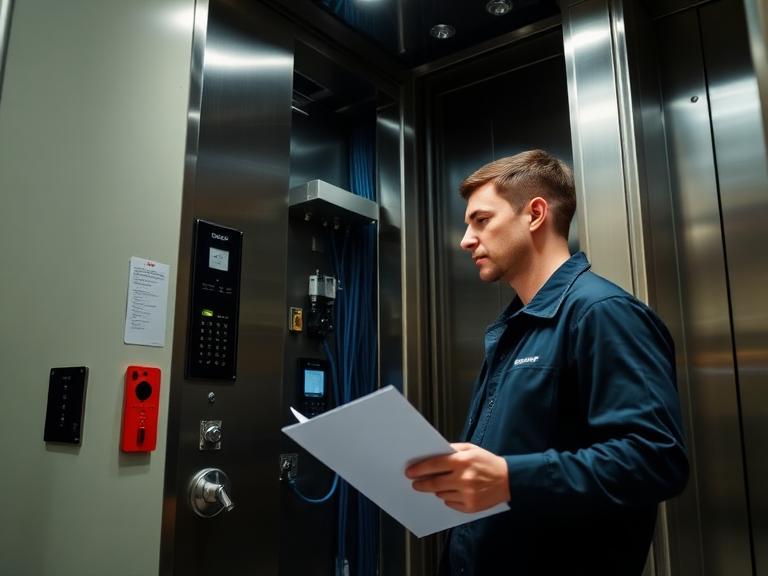
4. Technical Reference Matrix: Emergency Component Diagnostics
The time required to resolve an emergency repair depends heavily on whether the root cause is a simple mechanical misalignment or a catastrophic electronic component failure.
Emergency Repair Resolution Guide
| Critical System Failure Mode | Primary Root Cause Component | Required On-Site Tooling | Average Repair Window | Technical Safety Interventions |
| Open Safety Loop Lockout | Dirt or oxidation on the copper contacts inside a landing door interlock switch. | Digital multimeter, electrical contact cleaner, wire brush. | 30 to 45 Minutes | Clean or replace individual switch modules; verify safety string loop continuity. |
| ARD Failure During Power Cut | Degraded lead-acid battery cells or a burned-out battery charging circuit board. | Battery load tester, insulated hand tools, replacement battery blocks. | 1 to 2 Hours | Isolate the system; swap out failed battery cells; test backup rescue sequences. |
| VVVF Inverter Drive Blowout | Catastrophic failure of an IGBT power transistor due to voltage spikes or overheating. | Electrostatic discharge (ESD) wrist strap, torque drivers, replacement OEM drive. | 3 to 5 Hours | Run full parameter backups; swap out the drive module; recalibrate the motor tuning. |
| Hoistway Final Limit Overrun | Failure of a primary directional contactor or braking deceleration switch. | Heavy-duty mechanical rail clamps, hoisting chain blocks, specialized hand tools. | 2 to 4 Hours | Mechanically clamp the car; hand-wind the machine back into normal travel limits; replace failed switches. |
| Traveling Cable Ribbon Break | Copper conductor fracture caused by long-term bending fatigue inside the cable bundle. | Replacement high-flex ribbon cable, wire stripping tools, heat-shrink tubing. | 4 to 8 Hours | Fish a new cable run through the hoistway path; secure bundle loops; run terminal continuity audits. |
5. Regulatory Compliance and the Telangana Lifts Act
Operating high-rise vertical transport equipment requires strict adherence to regional safety laws and international engineering guidelines to protect passenger safety and avoid legal liabilities.
Statutory Safety Benchmarks
- The Telangana Lifts Framework Compliance: All passenger and material lifts operating across the state must comply with strict rules enforced by the Chief Electrical Inspectorate to Government (CEIG). If an elevator is found running with an expired operation permit or using unlicensed mechanics for critical repairs, authorities can issue immediate shutdown orders and level stiff financial fines.
- Mandatory Automatic Rescue Device (ARD) Integration: State safety guidelines make it mandatory for all passenger elevators to feature an operational ARD system. This safety module must be tested monthly to ensure it can automatically move a stalled car to safety during a utility power outage without human intervention.
- Accident Reporting Laws: If a serious mechanical failure or passenger injury occurs, building management is legally required to isolate the site and notify the CEIG within 24 hours. The elevator must remain out of service until a state inspector conducts a full technical safety audit and issues a formal clearance certificate.
6. Proactive Commercial Real Estate Asset Management: Strategic Value of AMCs
A reactive, “fix-it-when-it-breaks” maintenance approach is risky and expensive for modern high-rise operations. Implementing a rigorous, structured technical framework is essential for long-term reliability.
The True Costs of Neglecting Maintenance
Relying on low-cost, unqualified mechanics often introduces severe operational risks:
- Accelerated Wear Cycles: Poorly lubricated bearings and misaligned guide rails increase friction, putting extra load on the primary motors and cutting the equipment’s operational lifespan in half.
- Unpredictable Capital Outlays: Catching minor issues early prevents small problems from cascading into catastrophic failures, like a total VVVF module blowout or a cracked gear housing.
- Compromised Safety Systems: If safety checks are missed, critical backup equipment like emergency lighting, in-car communication links, and automatic rescue devices can fail when passengers need them most.
Key AMC Evaluation Metrics
When signing or renewing a commercial elevator Annual Maintenance Contract (AMC), verify these technical performance clauses:
- Mean Time To Repair (MTTR): The contract must specify a clear target MTTR (e.g., resolving standard mechanical or electrical faults within 45 minutes of a technician’s arrival).
- On-Site Parts Inventory: The service provider must maintain a local stock of critical spare parts—including door controllers, safety switches, logic boards, and contactors—to avoid shipping delays.
- Dedicated On-Site Engineering Support: For massive commercial properties or major tech parks, the contract should place a dedicated, certified lift technician permanently on-site during core business hours.
7. Frequently Asked Questions (FAQs)
Q1: Why do commercial lifts occasionally pause, skip floors, or clear their destination queues during voltage sags?
A: High-rise lift controllers utilize low-voltage DC logic circuits to manage their landing databases. When a building encounters a sudden voltage drop or power glitch, the line power can drop below the minimum required voltage for the microprocessor. This triggers a quick brownout reset on the logic board, erasing the floor memory queue and sending the car to the ground landing to recalibrate its position.
Q2: What exact criteria determine when steel suspension cables must be replaced?
A: Under safety code IS 14665, suspension ropes must be replaced immediately if they fail any of three core criteria:
- If the total number of visibly broken steel wires within a single cable lay length exceeds 10%.
- If you spot any signs of heavy localized corrosion or valleys between wire strands.
- If the physical rope diameter shrinks by more than 6% compared to its original factory size.
Q3: How does a lift technician diagnose intermittent CAN-bus communication drops across a multi-car elevator bank?
A: Technicians connect a specialized digital storage oscilloscope directly to the high and low lines of the CAN-bus circuit. They monitor the electrical signal shapes in real time, looking for anomalies like voltage reflections, high electrical noise, or poor termination resistance. These issues are typically traced back to worn traveling cables, loose wiring terminations, or water ingress inside a shaft junction box.
Q4: What is the main operational difference between a Type-A and a Type-B safety gear mechanism?
A: Type-A safety gears use instant mechanical clamping action, applying rigid steel jaws to the guide rails immediately. Because the stop is sudden, they are restricted to slower elevators running under $1.0\text{ m/s}$. Type-B safety gears use a progressive braking design, utilizing heavy-duty internal springs to slide smoothly to a controlled stop over a calculated distance, making them mandatory for high-speed commercial lifts.
Q5: How often do the mechanical brake linings on a high-speed PMSM motor require replacement?
A: Under normal operating conditions with a fine-tuned VVVF inverter drive, the mechanical brake pads can last for over 10 years. This longevity is achieved because the inverter handles almost all deceleration electronically, bringing the car to a full stop before the mechanical brakes clamp down to hold the cabin in place. The pads only experience mechanical wear during unexpected emergency stops or power failures.