
Table of Contents
Introduction: Yoga for Lower Back Pain at Home
Lower back pain has silently become one of the biggest global health challenges. According to multiple health reports across regions, more than 540 million people experience lower back discomfort at any given moment. Whether you live in India, USA, UK, Australia or the Middle East — the underlying causes remain the same: long hours of sitting, poor posture, stress, weak core muscles, and lifestyle imbalance.
But the surprising part?
Most cases of lower back pain do not require hospital visits, advanced tests, or medication-heavy routines. In fact, physiotherapists and global health bodies increasingly recommend therapeutic yoga as one of the most effective long-term solutions.
And the best part?
You can comfortably do it at home — safely, naturally, and without equipment.
This A–Z guide will walk you through:
- What causes lower back pain
- How yoga scientifically helps
- What NOT to do when practicing at home
- 15+ beginner-friendly poses (step-by-step)
- Complete morning & evening routines
- Breathing & mindfulness add-ons
- Realistic results timeline
- When you actually need a doctor
- How to stay consistent without losing motivation
Let’s begin.
A – Understanding the Real Causes of Lower Back Pain
Before fixing the problem, we must understand it.
1. Muscle Imbalance
This is the #1 cause globally.
Tight hip flexors + weak glutes + underactive core = pressure on the lower spine.
2. Long Sitting Hours
Remote work, digital jobs, long commutes — all contribute to muscular stiffness.
3. Wrong Posture
Slouched shoulders, curved spine, and leaning toward screens strain your lumbar region.
4. Stress Accumulation
Mental stress creates physical tension. The lower back is one of the first areas to stiffen.
5. Lack of Movement
Immobility reduces blood flow and weakens stabilizing muscles.
Science says:
Yoga specifically targets flexibility, mobility, spinal decompression, and strength activation — making it one of the safest long-term approaches.
B – How Yoga Helps Lower Back Pain: The Science Explained
Yoga is more than stretching. Evidence shows it provides:
✔ Spinal Decompression
Poses like Child’s Pose, Cat-Cow, and Downward Dog lengthen the spine and release pressure.
✔ Core Strengthening
A strong core supports the spine naturally.
✔ Hip Flexor Release
Tight hips often pull the spine forward; yoga helps relax them.
✔ Glute Activation
Strong glutes stabilize the pelvic region.
✔ Nervous System Relaxation
Breathing practices slow down the sympathetic (stress) response.
✔ Improved Blood Circulation
This accelerates healing and reduces inflammation.
C – Safety First: Things You Should NEVER Do
Before we begin the routine, here are global safety guidelines:
- ❌ Avoid deep forward bends (can worsen disc issues)
- ❌ Avoid fast movements and jerky transitions
- ❌ Avoid backbends if you feel sharp pain
- ❌ Never hold your breath
- ❌ Do not compare flexibility with others online
Stop immediately if you feel numbness, shooting pain, or tingling down the legs.
D – Warm-Up Routine (5 Minutes)
A proper warm-up protects you from injury.
1. Pelvic Tilts – 60 seconds
Gently move pelvis forward and back.
2. Hip Circles – 30 seconds each side
Loosen hip joints.
3. Cat-Cow – 8 repetitions
Mobilizes the entire spine.
4. Knee-to-Chest – 20 seconds each leg
Releases the lumbar region.
E – The 15-Pose Lower Back Pain Yoga Sequence (Step-by-Step)
This is a universal routine people can do from home, anywhere in the world.
1. Child’s Pose (Balasana) – The Pain-Reliever
Duration: 1–2 minutes
Relieves tension in lower back, hips, and spine.
How to do:
- Kneel comfortably
- Fold forward
- Stretch arms ahead
- Keep knees apart slightly
2. Cat-Cow (Marjaryasana–Bitilasana)
Repetitions: 10 slow rounds
Improves flexibility and decompresses the spine.
3. Downward Dog (Adho Mukha Svanasana)
Duration: 30–45 seconds
Lengthens hamstrings and relieves lower back stiffness.
4. Sphinx Pose
Gentle backbend that strengthens the spine.
5. Thread the Needle Pose
Opens upper back + reduces nerve compression.
6. Supine Twist (Supta Matsyendrasana)
Releases built-up tension in the lumbar area.
7. Bridge Pose (Setu Bandhasana)
Strengthens glutes + hamstrings + core — essential for preventing lower back pain.
8. Seated Forward Fold (modified)
Note:
We use a soft, safe variation to avoid strain.
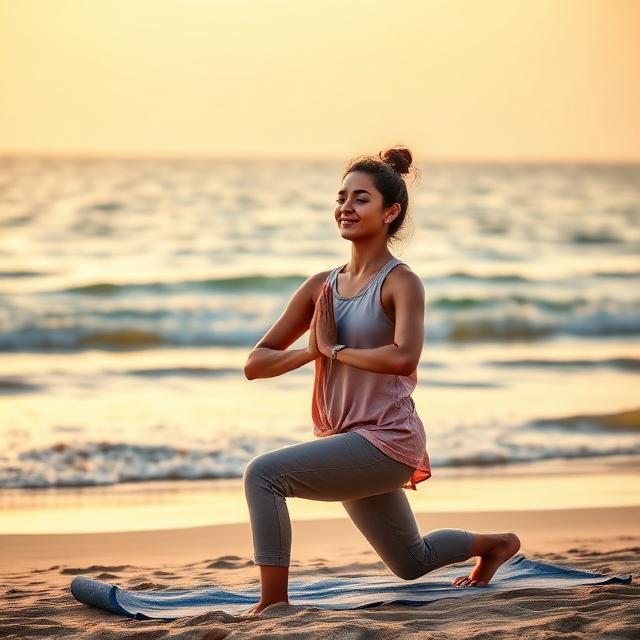
9. Low Lunge (Anjaneyasana)
Releases hip flexors, which often cause back pain.
10. Pigeon Pose (Beginner Modified)
Deeply stretches piriformis muscle.
11. Cobra Pose (Bhujangasana)
Strengthens spinal extensors.
12. Happy Baby Pose
Releases the entire lower spine and hips.
13. Side-Lying Leg Raises
Activates outer glutes and stabilizers.
14. Plank Hold
Strengthens deep core muscles.
15. Shavasana (Relaxation)
Allows the spine to settle and heal.
F – Complete Home Routine (Follow This Daily)
❇ Morning Routine (12 Minutes)
- Cat-Cow – 1 min
- Downward Dog – 45 sec
- Low Lunge – 1 min
- Pigeon Pose – 1 min
- Sphinx – 1 min
- Bridge Pose – 1 min
- Supine Twist – 1 min
- Shavasana – 2 min
❇ Evening Routine (10 Minutes)
- Pelvic Tilts – 1 min
- Child’s Pose – 2 min
- Happy Baby – 1 min
- Seated Forward Fold (safe) – 1 min
- Supine Twist – 1 min
- Shavasana – 3 min
G – Breathing Practices (Pranayama) for Back Pain
1. Deep Diaphragmatic Breathing (5 minutes)
Reduces stress-driven muscle tension.
2. Box Breathing
Best for people with stress-related back pain.
3. Alternate Nostril Breathing (Nadi Shuddhi)
Balances the nervous system.
H – Realistic Timeline: When Will You See Results?
Based on global physiotherapy recommendations:
- 1 week: Reduced stiffness
- 2–3 weeks: Noticeable decrease in pain
- 4–6 weeks: Improved posture + core strength
- 8–12 weeks: Long-term relief
Consistency is key.
I – When NOT to Do Yoga (Important!)
Avoid yoga if you have:
- Fever
- Severe inflammation
- Acute injury
- Recent surgeries
- Unexplained severe pain
Consult a doctor if symptoms persist.
J – Staying Consistent at Home
Here are globally proven motivation hacks:
- Keep a dedicated mat space
- Track progress with 5-minute journal
- Use soft music
- Pair yoga with a reward
- Keep sessions short but daily
K – Final Thoughts
Lower back pain affects millions globally — but it doesn’t have to define your life. With the right yoga approach, consistent routines, and safe modifications, you can transform your spine health naturally from home.
If you want structured outdoor + hybrid yoga support, guided sessions, and personalized beginner routines — Outdoor Yoga Chennai (OYC) offers one of the most holistic experiences for complete well-being.