

Table of Contents
Iyengar Yoga for Beginners: A Complete Step-by-Step Guide (New LSI Keyword)
1. Introduction: Why Iyengar Yoga Is the Perfect Starting Place for New Practitioners
If you’re new to yoga and searching for a style that is safe, structured, supportive, and beginner-friendly, Iyengar Yoga stands out as one of the best places to begin. Unlike fast-paced yoga forms or intense flows, Iyengar Yoga focuses on:
- Precise alignment
- Slow, mindful postures
- Use of props for support
- Correcting posture gently and safely
- Building strength step by step
For beginners, these are priceless advantages—because instead of jumping into complicated flows, you learn the foundation correctly from day one.
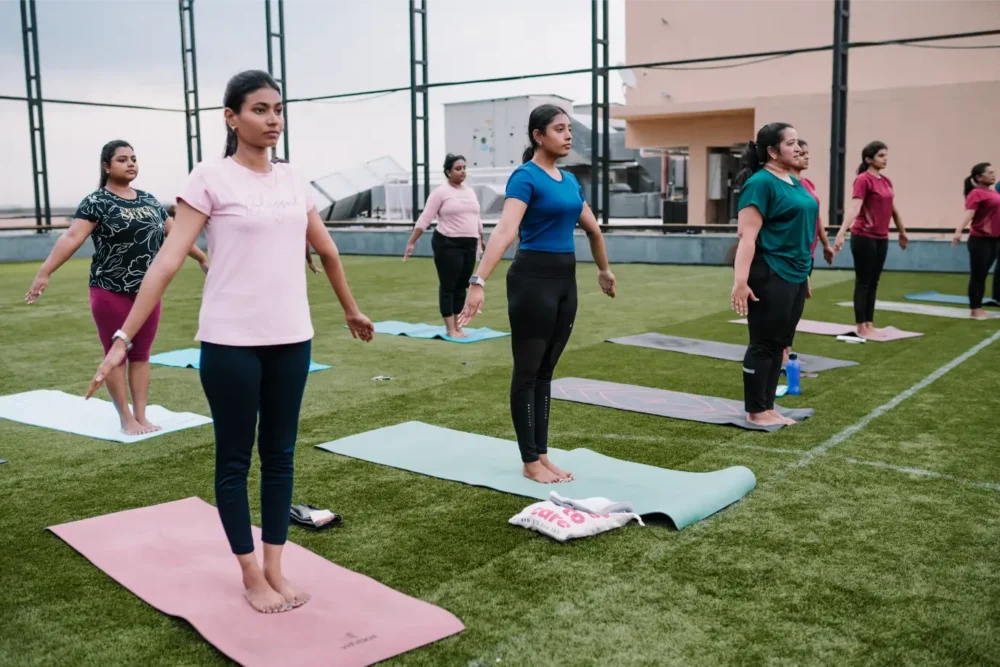
In this guide, you’ll get a complete beginner roadmap to Iyengar Yoga, including:
- What Iyengar Yoga actually is
- Whether it’s suitable for absolute beginners
- Core principles and how they help your body
- Step-by-step poses explained in simple words
- How much time, practice, and frequency you need
- Mistakes beginners commonly make (and how to avoid them)
- A personalized routine you can follow at home
- Tips on choosing the right studio or trainer
- Why this yoga style can transform posture, flexibility, and pain reduction
Let’s dive deep into one of the world’s most respected and scientific yoga systems.
2. What Is Iyengar Yoga? Understanding the Foundations
Iyengar Yoga was developed by B.K.S. Iyengar, one of the most influential yogis of the modern era. This yoga style is built on four pillars:
1. Alignment
Every posture is done with accuracy:
- Straight spine
- Open shoulders
- Balanced hip placement
- Controlled breathing
This ensures that even beginners avoid injury while gaining strength.
2. Precision
Instead of fast movements, you focus on doing each pose correctly.
Iyengar is not about how many poses you do—it is about how well you do them.
3. Props
Beginners love Iyengar because it uses:
- Yoga blocks
- Chairs
- Belts
- Bolsters
- Walls
- Blankets
Props help you perform poses safely, even if you lack flexibility at the beginning.
4. Holding Postures
Postures are held for slightly longer periods, helping you build muscle memory, focus, and balance.
3. Why Iyengar Yoga Is Perfect for Beginners
Many yoga styles can feel overwhelming for newcomers. Iyengar breaks everything into simple, achievable steps.
✓ Safe for stiff bodies
Even if you can’t touch your toes, no problem—props support you.
✓ Slower pace = better learning
You get time to understand how your body moves.
✓ Ideal for people with back pain or posture issues
Alignment-focused training reduces chronic pain over time.
✓ Builds confidence
Small wins in each session help beginners feel motivated.
✓ Great for all ages
Whether you’re 15 or 60+, Iyengar Yoga adapts to you.
4. Who Should Choose Iyengar Yoga?
Great for:
- Absolute beginners
- Working professionals with desk posture issues
- People with back, neck, shoulder pain
- Senior citizens
- People recovering from injuries (under guidance)
- Anyone wanting strong fundamentals
Not ideal for:
- Those seeking fast flow workouts
- People wanting dynamic cardio-like movement
If your goal is correct posture, long-term flexibility, safe strength building, this style fits perfectly.
5. Core Principles of Iyengar Yoga (Explained Simply)
To truly understand Iyengar Yoga, keep these principles in mind:
1. Body Awareness
Each position teaches you what your body is doing—helping you correct posture naturally throughout daily life.
2. Breath–Movement Connection
Breathing is slow, mindful, and helps deepen each stretch safely.
3. Symmetry
Both sides of the body are balanced to prevent muscular imbalances.
4. Stability First, Flexibility Next
Iyengar teaches strong foundations before deep stretches.
5. Mindfulness Without Sitting Still
Meditation happens inside the movement.
6. Beginner-Friendly Iyengar Yoga Poses (Explained Step-by-Step)
Below are 10 essential beginner poses with simple instructions.
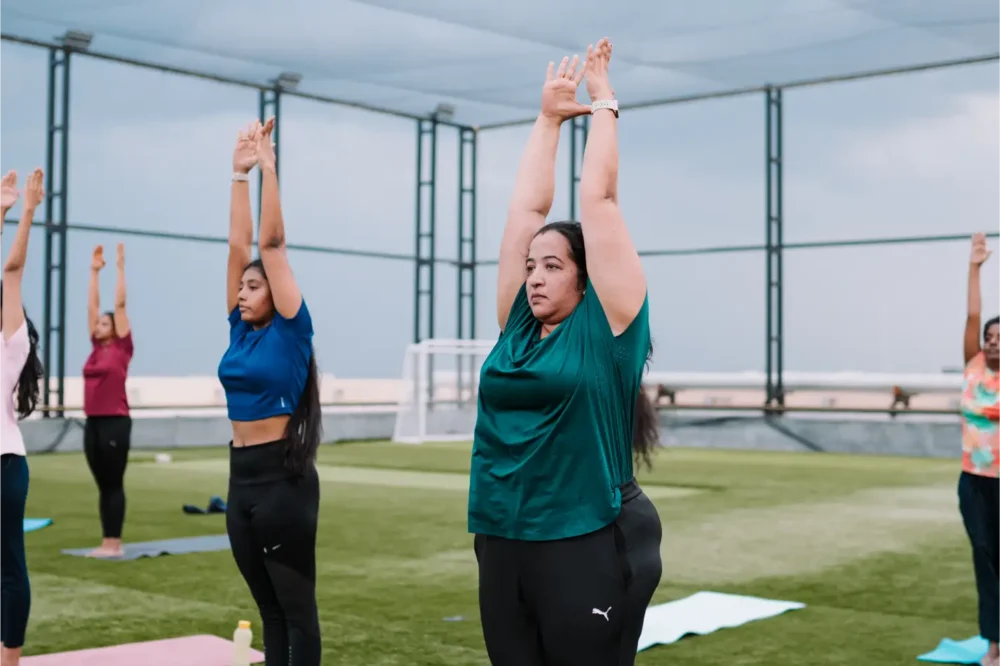
1. Tadasana (Mountain Pose)
Benefits: Posture correction, grounding, balancing
Steps:
- Stand straight with feet hip-width apart.
- Knees soft, shoulders relaxed.
- Lift your chest gently, breathe deeply.
- Keep the spine tall.
2. Adho Mukha Svanasana (Downward Dog)
Benefits: Strengthens arms, opens hamstrings
Props: Use a block under each hand
Steps:
- Start on hands and knees.
- Lift your hips up gradually.
- Keep the back straight, bend knees slightly if needed.
- Press heels gently downward.
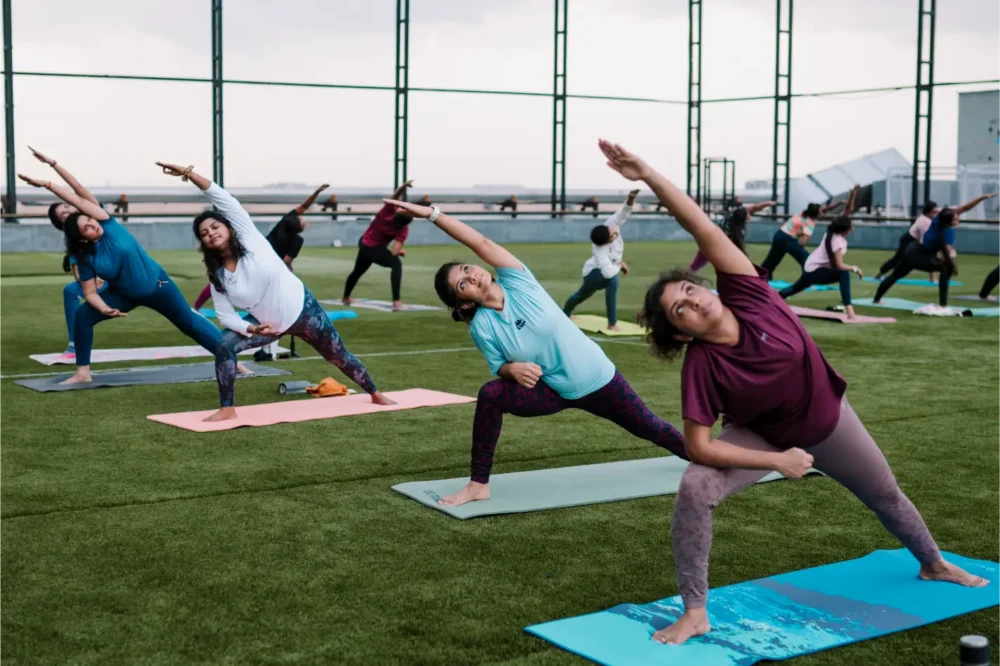
3. Trikonasana (Triangle Pose)
Benefits: Hip opening, balance, flexibility
Props: Place a block under the lower hand
Steps:
- Stand wide-legged.
- Extend right hand down to a block.
- Stretch the left hand straight up.
- Keep chest open.
4. Virabhadrasana II (Warrior II)
Benefits: Leg strength + stamina
Steps:
- Open legs wide, bend front knee 90 degrees.
- Extend arms sideways.
- Keep spine neutral and strong.
5. Setu Bandhasana (Bridge Pose)
Benefits: Strengthens glutes, opens chest
Props: Place a block under your sacrum
Steps:
- Lie on your back, bend knees.
- Lift hips slowly.
- Hold with block support.
6. Supta Padangusthasana (Reclining Hand-to-Big-Toe)
Props: Use a belt
Benefits: Hamstring stretch
Steps:
- Lie flat and raise one leg.
- Loop belt around foot.
- Pull leg gently toward you.
7. Beginner-Friendly Iyengar Yoga Routine (20–30 Minutes)
Warm-up (5 Minutes)
- Wrist and ankle rotations
- Shoulder rolls
- Neck alignment warm-up
- Gentle forward fold using a chair
Main Flow (15 Minutes)
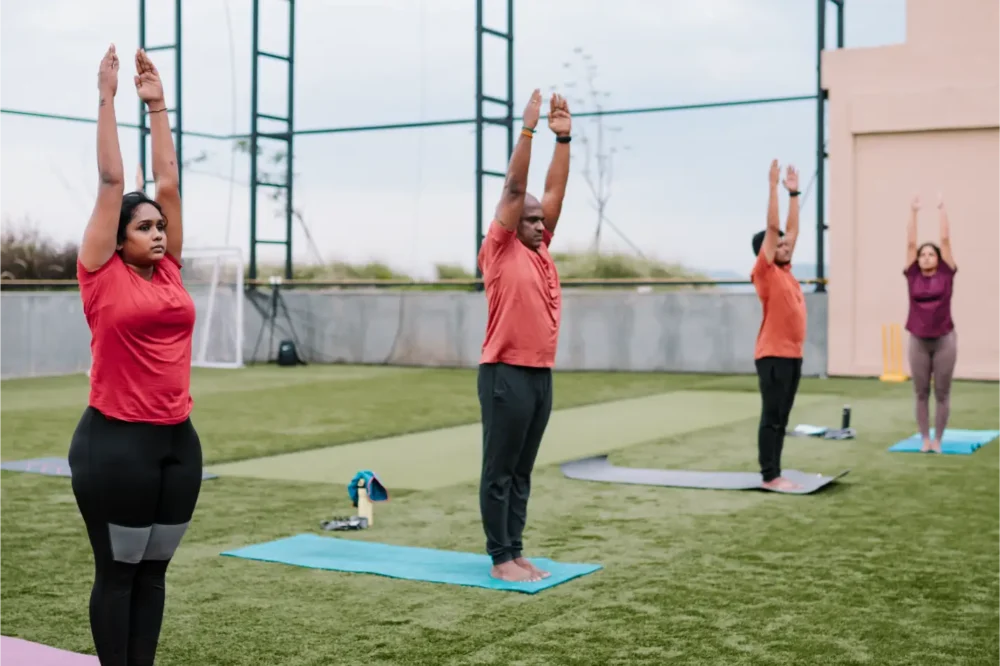
- Tadasana – 1 minute
- Triangle Pose – 1 minute per side
- Warrior II – 1 minute per side
- Downward Dog – 2 minutes with breaks
- Bridge Pose – 2 minutes
- Seated Forward Bend – 2 minutes
- Reclining Leg Raise – 1 minute per side
Cool Down (5 Minutes)
- Child’s pose
- Supine relaxation
- Deep breathing
8. Common Beginner Mistakes (And How to Avoid Them)
❌ Mistake 1: Forcing flexibility quickly
Iyengar is not about touching the floor—focus on alignment instead.
❌ Mistake 2: Ignoring props
Props are your best friend. They enhance posture, not “weaken” it.
❌ Mistake 3: Over-tightening muscles
Relax gradually into poses.
❌ Mistake 4: Incorrect breathing
Breathe through a posture, not around it.
9. How Often Should Beginners Practice Iyengar Yoga?
Recommended frequency:
- 3 days a week minimum
- Daily short sessions give faster results
Visible improvements begin in:
- 2–4 weeks: posture & joint mobility
- 6–8 weeks: flexibility increases
- 10–12 weeks: strength, balance, mental calmness
10. Health Benefits of Iyengar Yoga for Beginners
Physical Benefits
- Improved posture
- Relief from back and neck pain
- Better core strength
- Balanced joints
- Increased flexibility
- Reduced stiffness
Mental Benefits
- Lower stress
- Better emotional regulation
- Enhanced patience
- Body–mind connection
Long-Term Benefits
- Joint longevity
- Better muscular coordination
- Natural correction of imbalances
- Improved respiratory strength
11. How to Choose the Right Iyengar Yoga Trainer or Studio
Look for instructors with:
- Official Iyengar Yoga certification
- Experience teaching beginners
- Clear instruction style
- Focus on alignment and safety
- Clean, well-equipped studio
- Props available
Avoid studios that:
- Rush through the class
- Ignore alignment
- Do not assist beginners
A good trainer transforms your experience from “confusing” to “life-changing.”
12. Why Iyengar Yoga Is a Great Style for Long-Term Practice
Unlike many fitness trends, Iyengar Yoga is:
- Sustainable
- Beginner-friendly
- Scientifically structured
- Inclusive
- Therapeutic
You grow at your own pace—gradually and safely.
13. Final Guide for Beginners: Should You Start Iyengar Yoga?
If you want a yoga style that:
✓ Teaches proper alignment
✓ Helps with posture issues
✓ Uses safe props
✓ Builds confidence
✓ Reduces pain naturally
✓ Creates long-term flexibility
✓ Doesn’t overwhelm beginners
Iyengar Yoga is an excellent choice.
It’s not about speed.
It’s about correctness, foundation, and transformation.
14. Conclusion
For anyone stepping into yoga for the first time, Iyengar Yoga creates the perfect start—safe, structured, supported, and deeply transformative. Over time, it builds strong posture, reduces pain, increases balance, and strengthens both body and mind.
If you are looking for a yoga style that you can grow with for years, Iyengar Yoga is one of the best systems to follow.