
Table of Contents
Precision Vertical Transit Engineering: Lift Mechanic Services in HITECH City
HITECH City, Hyderabad’s premier technological and commercial hub, features a demanding built environment. The architectural landscape spans massive IT parks in Madhapur and Gachibowli, expansive commercial complexes, and high-density, multi-story residential towers. These structures rely on continuous, high-speed vertical transportation.
Unlike low-rise suburban settings, the elevators operating across HITECH City process hundreds of thousands of duty cycles weekly. They utilize complex sub-systems like Permanent Magnet Synchronous Motor (PMSM) gearless drives, high-frequency Variable Voltage Variable Frequency (VVVF) inverters, and sophisticated integrated microprocessor networks.
When these systems experience operational issues or unexpected downtime, the impact is immediate: it disrupts corporate workflows, reduces building efficiency, and compromises safety. Resolving these complex electrical and mechanical issues requires specialized expertise. Professional lift mechanic services in hitech city provide specialized diagnostic, repair, and certification solutions. These services keep your assets compliant with the latest Telangana Lifts, Escalators, and Passenger Conveyors Act mandates and the rigorous engineering provisions of the National Building Code (NBC) of India.
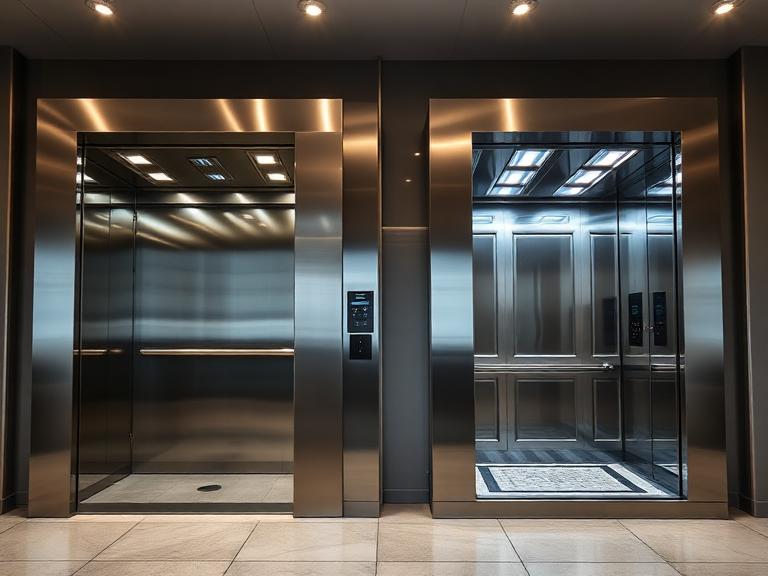
1. Advanced Structural and Electrical Diagnostics in Modern Elevators
Modern high-speed elevators are integrated mechatronic networks. When an issue occurs within a system running at speeds exceeding $2.0 \text{ m/s}$, finding the root cause requires a systematic engineering approach rather than basic trial-and-error troubleshooting.
A. Integrated Microprocessor Control & Bus Communication Faults
Modern elevator groups in tech parks utilize distributed control systems. Here, individual car controllers talk to group supervisory computers via Controller Area Network (CAN bus) data lines.
- The Diagnostic Challenge: Intermittent data packet drops caused by electromagnetic interference (EMI) from building power transformers or poor grounding can trigger sudden emergency stops. Mechanics use portable digital storage oscilloscopes to check the CAN-high and CAN-low signal lines, identifying noise spikes that disrupt operations.
- The Engineering Resolution: Mechanics install shielded twisted-pair wiring, isolate the logic grounding circuits from the building’s main earth grounds, and replace damaged transceiver ICs on the main board to restore stable communication.
B. High-Frequency VVVF Inverter Drive Failures
The VVVF drive regulates the three-phase AC power fed to the traction machine, managing acceleration and deceleration curves to ensure smooth transit.
- The Diagnostic Challenge: Continuous high-load cycles in warm machine rooms can degrade the drive’s internal DC bus capacitors or cause thermal fatigue in the Insulated Gate Bipolar Transistor (IGBT) power modules. This deterioration shows up as rough acceleration, leveling issues at the floor, or high-frequency humming noises.
- The Engineering Resolution: Technicians verify the drive’s internal thermal logging parameters, measure the ESR (Equivalent Series Resistance) of the capacitor banks, replace failing IGBT modules, and adjust the drive’s carrier frequency settings to optimize energy consumption and motor performance.
C. Electro-Mechanical Brake Air-Gap and Torque Deviations
Passenger safety relies completely on the spring-applied, electrically released dual-plunge electromagnetic brakes on the traction machine.
- The Diagnostic Challenge: Normal wear on the brake lining friction pads changes the stroke distance of the internal plunger. If this air gap widens beyond the manufacturer’s specification (typically $0.2 \text{ mm}$ to $0.3 \text{ mm}$), the brake shoes may drag or fail to open fully, causing excessive heat buildup and erratic stopping.
- The Engineering Resolution: Lift mechanics use precision feeler gauges to check the air gap at multiple points, adjust the compression springs to match the exact factory torque specifications, and replace glazed or worn friction elements to ensure positive stopping power.
2. Component Longevity, Calibration Metrics, and Budget Profiles
Maintaining corporate asset values requires clear cost tracking and predictable repair schedules. The table below lists the technical life cycles, operational calibration targets, and estimated investment costs for primary elevator sub-systems in HITECH City.
Technical Component Status and Cost Index
| Elevator Sub-System Module | Critical Engineering Calibration Metric | Operational Lifespan | Estimated Repair/Replacement Cost (INR) |
| PMSM Gearless Traction Machine | Insulation Resistance $\ge 500 \text{ M}\Omega$; Radial Runout $\le 0.02 \text{ mm}$ | 18 to 22 Years | ₹1,85,000 – ₹4,20,000 |
| VVVF Inverter Control Unit | Ripple Voltage $\le 2\%$; Switching Frequency $8 \text{ kHz} – 16 \text{ kHz}$ | 7 to 10 Years | ₹55,000 – ₹1,35,000 |
| High-Tensile Suspension Ropes | Diameter reduction $\le 6\%$ of nominal; Tension variance $\le 5\%$ | 6 to 8 Years | ₹45,000 – ₹1,10,000 |
| Infrared Light Curtain Array | Cross-beam density $\ge 154$ channels; Response speed $\le 65 \text{ ms}$ | 4 to 5 Years | ₹12,500 – ₹24,000 |
| Overspeed Governor Assembly | Trip speed set exactly at $115\%$ of nominal contract speed | 12 to 15 Years | ₹28,000 – ₹65,000 |
| Solid-State Car Shoes & Liners | Face clearance tolerance fixed precisely at $1.0 \text{ mm}$ | 2 to 3 Years | ₹8,000 – ₹18,500 |
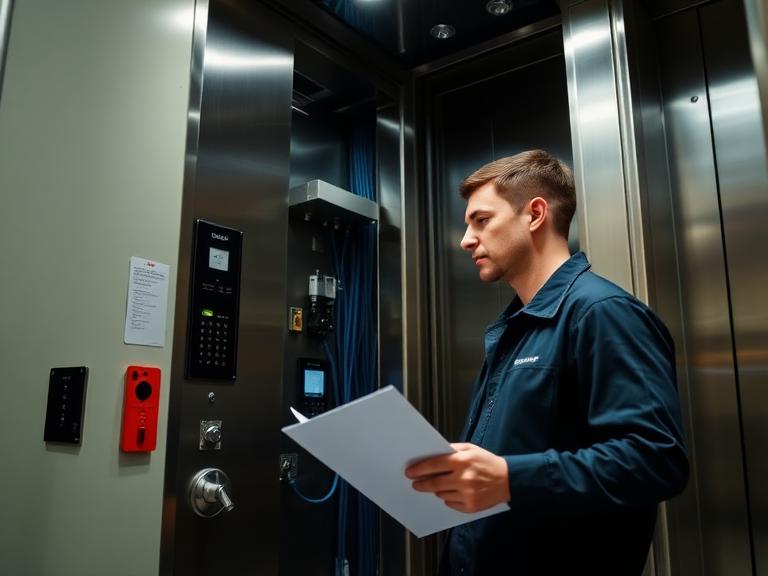
3. Systematic Mechanical Troubleshooting & Calibration Protocol
Experienced mechanics follow an established, structured testing sequence to diagnose complex mechanical and electrical issues. This methodical approach ensures that root causes are addressed, rather than just masking surface symptoms.
Phase 1: Electrical Isolation and Power Quality Assessment
Before opening any high-voltage enclosures, the mechanic isolates the incoming power lines using an approved Lockout-Tagout (LOTO) protocol. They use power quality analyzers to check for voltage imbalances, total harmonic distortion (THD), and transient surges across the incoming three-phase supply, verifying that the building’s electrical feed meets the elevator controller’s input requirements.
Phase 2: Systematic Safety Circuit Continuity Analysis
An elevator’s safety chain consists of multiple electro-mechanical switches wired in series, including pit buffers, terminal limits, car-top escapes, and door interlocks. Using a digital multimeter set to a low-resistance scale, the mechanic traces the circuit from terminal to terminal, locating the exact switch causing the open-circuit fault without jumping or bypassing active safety features.
Phase 3: Mechanical Alignment & Runout Verification
For structural vibrations, mechanics use magnetic-base dial indicators to check the traction sheave and motor shaft for axial and radial runout. They use laser alignment systems to verify that the car and counterweight guide rails run perfectly parallel down the entire height of the hoistway, ensuring alignment sits within a strict $0.5 \text{ mm}$ variance per 30-meter section.
Phase 4: Dynamic Full-Load Calibration Tests
Once repairs are complete, the mechanic conducts dynamic load testing. They load the elevator car to its rated capacity with certified test weights and run it through full travel cycles. Using clamp-on current probes, they monitor current draw during acceleration, full-speed transit, and deceleration, confirming that the motor and drive operate within their specified thermal and electrical boundaries.
4. Emergency Passenger Rescue & Safety Gear Testing
If a control system failure or power loss stalls an elevator car between floors with passengers inside, mechanics follow strict rescue procedures to ensure a safe, controlled evacuation.
Authorized Passenger Rescue Protocol
1.Verify Passenger Safety and Secure Machine Room:Phase I.
The responding mechanic confirms communication via the cabin’s intercom to reassure passengers. They then enter the machine room, isolate the main three-phase power breaker, and apply a lockout tag to prevent accidental startup.
2.Determine Cabin Position and Check Cable Markings:Phase II.
The technician checks the digital display on the controller or looks at the paint markings on the hoisting cables to determine the car’s position relative to the nearest floor landing zone.
3.Execute Manual Brake Release and Controlled Winding:Phase III.
The mechanic fits the manual hand-winding wheel onto the motor shaft. They carefully apply the manual brake release lever in short, controlled bursts, allowing the counterweight imbalance to gently guide the car toward the nearest floor landing.
4.Manually Release Door Locks and Evacuate Passengers:Phase IV.
Once the cabin is level with the landing zone, the mechanic moves to that floor and uses a specialized triangular emergency release key to unlock the outer landing doors, allowing passengers to exit safely.
Critical Operational Mandate: The mechanical safety gear—comprising the overspeed governor, steel cable linkages, and instantaneous or progressive car safety wedges—must be drop-tested under full-load conditions every twelve months. This test ensures that if a free-fall or overspeed event occurs, the mechanical wedges bite into the guide rails and stop the car instantly, completely independent of any electrical or software systems.
5. Regulatory Compliance and the Telangana Lifts Act
The legal and regulatory framework governing elevator operations in Hyderabad has updated significantly. The Telangana Lifts, Escalators, and Passenger Conveyors Act enforces strict accountability for building management teams and maintenance providers.
- Mandatory Licensing Protocols: Building owners cannot legally run an elevator without a valid “License to Run” issued by the Telangana State Electrical Inspectorate. This license requires regular renewals based on detailed safety audits.
- BIS Code Alignment: All replacement parts used during repairs—such as suspension ropes, overspeed governors, door locks, and control panels—must carry verified Bureau of Indian Standards (BIS) IS 14665 certification markings. Installing uncertified or gray-market components can result in heavy financial penalties, system shutdowns, and the immediate cancellation of the building’s insurance policies.
- Mandatory Safety Enhancements: The state regulatory framework bans old-style manual open-grill sliding doors because they pose severe passenger safety risks. All older installations must be upgraded to automated solid sliding doors fitted with functional infrared light curtains. Furthermore, every system must feature an active, battery-backed Automatic Rescue Device (ARD) that automatically moves the car to the nearest landing during a power failure.
6. Selecting an Asset Maintenance Model: AMC vs. CAMC
Property managers must choose an appropriate service model to handle post-repair maintenance and minimize long-term operational risks.
Structural Service Agreement Comparison
| Service Deliverable & Parts Coverage | Standard Annual Maintenance Contract (AMC) | Comprehensive Annual Maintenance Contract (CAMC) |
| Routine Preventative Maintenance Visits | Included (Typically 12 planned sessions per year) | Included (Detailed monthly engineering checks) |
| Emergency Breakdown Call-out Services | Included during standard working hours only | Included 24/7/365 with priority response tracking |
| Microprocessor & Logic Control Boards | Billed separately at standard market prices | Fully covered; immediate swap-out from local stock |
| VVVF Inverter Drives & IGBT Modules | Customer pays full cost for parts and installation | Fully covered; includes tracking and installation |
| Traction Ropes & Mechanical Sheaves | Excluded; billed based on materials and labor | Fully covered under the standard fixed annual rate |
| Lubricants, Cleaning Solvents, & Buffers | Included in the basic contract rate | Included in the basic contract rate |

7. Frequently Asked Questions
Q1: What causes an elevator to travel past its designated terminal floor and trigger a limit-switch shutdown?
A: This over-travel issue typically stems from a failure in the floor selection counting software, misaligned magnetic positioning switches in the hoistway, or degraded brake performance. When the VVVF drive does not receive accurate position data, it cannot apply the deceleration curve correctly. The car then slides past the terminal landing, tripping the physical limit switch to cut all power as a safety precaution.
Q2: Why does our elevator car shake or vibrate when traveling through specific sections of the hoistway?
A: Mid-travel vibrations are usually caused by misaligned guide rail joints, worn guide shoe liners, or uneven tension across the steel suspension ropes. If one cable carries more load than the others, it introduces lateral forces that cause the car cabin to wobble against the guide rails at specific heights.
Q3: How often do ARD battery systems need to be replaced, and why do they fail prematurely?
A: Under normal conditions, industrial lead-acid or lithium iron phosphate ARD backup batteries last between 3 and 5 years. Premature failures are often caused by poor climate control in rooftop machine spaces. High ambient temperatures degrade the batteries’ internal chemistry, causing them to drop charge capacity and fail during a power outage.
Q4: What are the risks of ignoring a slow-clearing or sticking elevator door interlock mechanism?
A: Ignoring a sticky door interlock can lead to intermittent system shutdowns or, in worst-case scenarios, a dangerous condition called a “gate circuit bypass.” If a door lock sticks in the closed position mechanically while the door is physically open, the controller may assume the hoistway is secure and move the car, creating a severe safety hazard.
Q5: Can an elevator’s maximum passenger capacity be increased by upgrading the traction motor?
A: No. An elevator’s rated passenger capacity is limited by the structural design of the car enclosure, the counterweight frame assembly, and the guide rail brackets anchorages. Upgrading the traction motor without completely re-engineering the entire structural framework violates IS 14665 safety standards and will cause the system to fail regulatory safety inspections.