
Table of Contents
Advanced Sun Tan Removal Treatment Hyderabad | Dr. Showrya Gadde
Sun exposure is an inescapable part of daily life in South India. However, prolonged exposure to Ultraviolet (UV) radiation triggers an adaptive defense mechanism in human skin, resulting in uneven skin darkening, persistent sun tanning, rough skin texture, and premature photodamage. For working professionals, IT executives, students, and outdoor enthusiasts across Hyderabad—especially in tech corridors like Kondapur, Madhapur, HITEC City, Gachibowli, Jubilee Hills, and Banjara Hills—seeking professional Sun Tan Removal Treatment in Hyderabad is an essential step toward restoring a uniform, radiant, and healthy complexion.
While commercial beauty parlors and over-the-counter “D-Tan” bleaching packs promise instant results, true skin de-tanning requires clinical dermatological science. Bleaching chemicals mask surface dark pigment temporarily while risking severe chemical contact dermatitis, skin barrier damage, and rebound hyperpigmentation.
At Dr. Showrya Gadde Dermatology & Wellness (located in Jubilee Enclave, Kondapur, near HITEC City), clinical sun tan removal relies on evidence-based protocols. Board-certified dermatologists utilize US-FDA approved Q-Switched Nd:YAG (1064nm) lasers, dermatological body chemical peels, Signature HydraFacials, and medical depigmenting active infusions to clear stubborn face and body tanning safely.
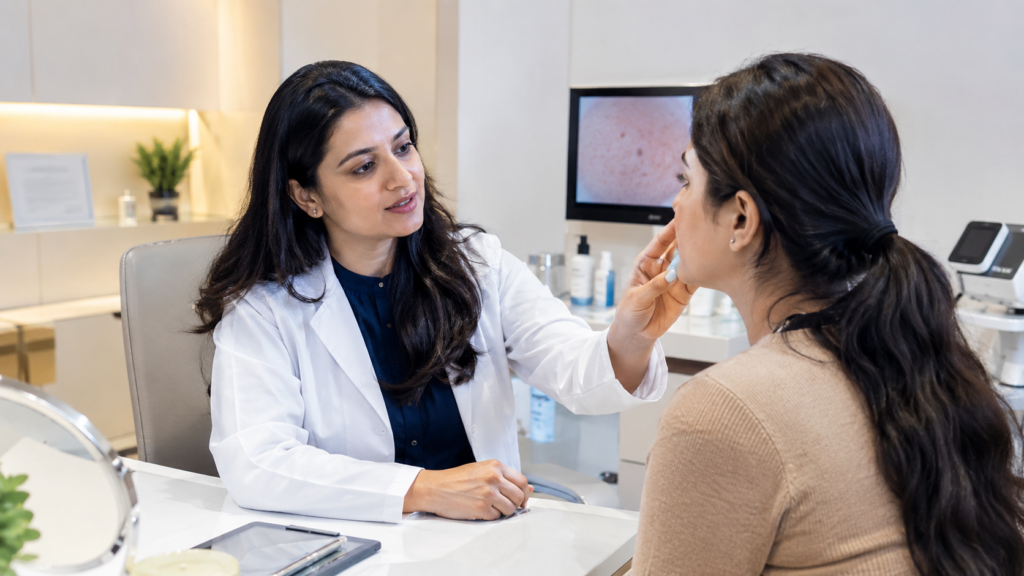
1. Photobiology: How Sun Tanning Occurs at the Cellular Level
To understand why simple creams fail to clear deep sun tanning, one must examine the biological process of induced melanogenesis within the skin layers.
┌─────────────────────────────────────────────────────────┐
│              1. SOLAR UV RADIATION EXPOSURE             │
│ • UVA Rays (320–400nm) penetrate deep into reticular dermis│
│ • UVB Rays (290–320nm) cause superficial epidermal burn │
└────────────────────────────┬────────────────────────────┘
                             │
┌────────────────────────────▼────────────────────────────┐
│              2. TYROSINASE ENZYME ACTIVATION            │
│ • Keratinocytes release α-MSH & Endothelin-1 hormones   │
│ • Tyrosinase enzyme converts L-Tyrosine to L-DOPA       │
└────────────────────────────┬────────────────────────────┘
                             │
┌────────────────────────────▼────────────────────────────┐
│           3. MELANIN SYNTHESIS & DENDRA TRANSFER        │
│ • Melanocytes produce Eumelanin (brown/black pigment)   │
│ • Melanosomes travel through dendrites to keratinocytes │
└────────────────────────────┬────────────────────────────┘
                             │
┌────────────────────────────▼────────────────────────────┐
│              4. VISIBLE SUN TAN FORMATION               │
│ • Melanin caps settle above cell nuclei to shield DNA    │
│ • Outer skin layers darken uniformly (Sun Tan)          │
└─────────────────────────────────────────────────────────┘
The Two Phases of Tanning:
- Immediate Pigment Darkening (IPD): Caused primarily by UVA radiation and high-energy visible (HEV) blue light. UVA rays oxidize existing pre-formed melanin in skin cells, causing dark discoloration within minutes to hours of sun exposure.
- Delayed Tanning (DT): Driven by UVB and UVA radiation over 3 to 7 days. UV light penetrates the basal epidermal layer, triggering melanocyte-stimulating hormone ($\alpha$-MSH). This activates the key enzyme tyrosinase, which converts L-tyrosine into eumelanin (dark brown/black pigment). These pigment packages (melanosomes) are transferred into surrounding keratinocytes, forming protective “melanin caps” over cell nuclei to shield DNA from solar damage.
2. Clinical Modalities for Sun Tan Removal in Hyderabad
Reversing deep sun tanning requires a multi-layered approach: shattering deep dermal and epidermal melanin deposits while accelerating the shedding of tanned surface cells.
                           ┌────────────────────────────────────────┐
                           │    CLINICAL TAN REMOVAL MODALITIES     │
                           └───────────────────┬────────────────────┘
                                               │
       ┌──────────────────┬────────────────────┼──────────────────┬──────────────────┐
       ▼                  ▼                    ▼                  ▼                  ▼
┌──────────────┐   ┌──────────────┐     ┌──────────────┐   ┌──────────────┐   ┌──────────────┐
│ Q-Switched   │   │ Dermatolog.  │     │ Signature    │   │ Mesotherapy  │   │ Medical      │
│ Laser Toning │   │ Body Peels   │     │ HydraFacials │   │ Antioxidants │   │ Depigmenting │
│  (1064nm)    │   │ (AHA / BHA)  │     │ & OxyGeneo   │   │ (Glutathione)│   │ Actives      │
└──────────────┘   └──────────────┘     └──────────────┘   └──────────────┘   └──────────────┘
1. Q-Switched Nd:YAG Laser Toning (1064nm)
The gold standard for deep epidermal and dermal sun de-tanning in South Asian skin (Fitzpatrick Types IV–VI).
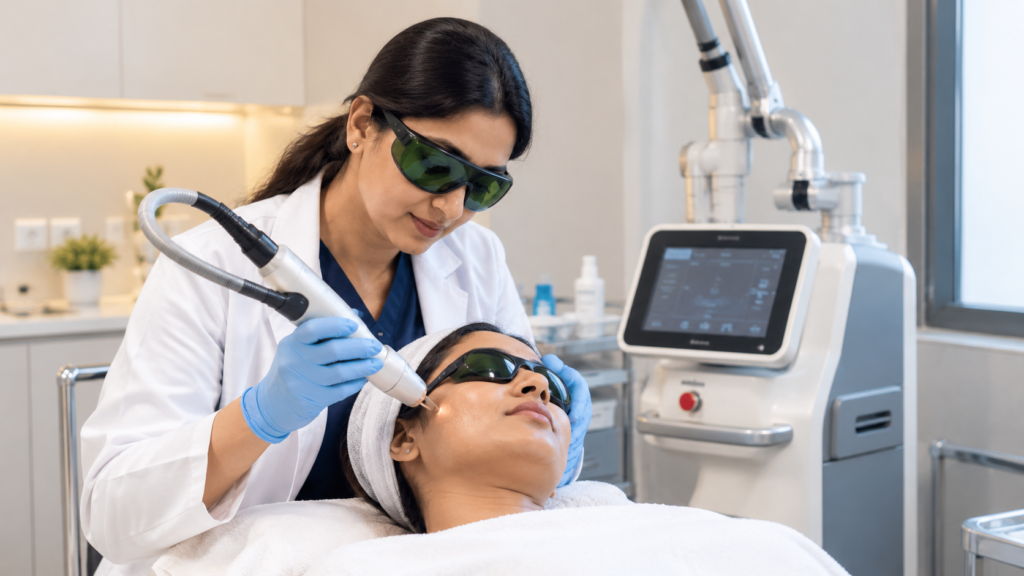
- Mechanism: Delivers nanosecond pulses of 1064nm laser energy into the skin. Its photo-acoustic shockwave shatters dense melanin clusters into microscopic particles without generating excess surface heat.
- Lymphatic Clearance: Scavenger immune cells (macrophages) engulf these micro-particles and naturally flush them out through the lymphatic system over subsequent weeks.
- Downtime: Zero social downtime; leaves skin visibly brighter and smoother.
2. Dermatological Chemical Body Peels
Clinical chemical peels use pharmaceutical-grade organic alpha and beta hydroxy acids to lift persistent sun tanning from face and body skin.
- Lactic Acid Peels (30%–50%): Derived from fermented milk, lactic acid is a large-molecule Alpha Hydroxy Acid (AHA) that gently exfoliates surface cells, hydrates the skin, and inhibits tyrosinase activity—making it ideal for sun-damaged, dry skin.
- Glycolic Acid Peels (20%–50%): Small-molecule AHA that penetrates deep to break intercellular bonds, shedding tanned surface cells and accelerating cell renewal.
- Mandelic & Salicylic Peels: Lipophilic acids ideal for oil-prone or sensitive skin, clearing intra-pore sun tanning, congestion, and post-sun breakouts.
3. Signature HydraFacial & OxyGeneo Medical De-Tanning
Combining vortex extraction, physical exfoliation, and deep nutrient infusion to restore sun-damaged skin.
- HydraFacial Vortex De-Tanning: Uses a spiral suction tip to exfoliate dead, tanned stratum corneum cells while simultaneously infusing antioxidant serums (Vitamin C, Alpha Arbutin, Hyaluronic Acid) deep into the skin.
- OxyGeneo 3-in-1 Therapy: Triggers the physiological “Bohr Effect,” increasing tissue oxygen levels to detoxify sun-damaged skin cells and boost active nutrient absorption.
4. Mesotherapy & Antioxidant Infusions
Targeted micro-infusions of potent antioxidant cocktails directly into the dermal-epidermal junction.
- Glutathione & L-Ascorbic Acid (Vitamin C): Converts dark eumelanin into lighter phaeomelanin, neutralizes free radicals caused by UV radiation, and restores skin barrier health.
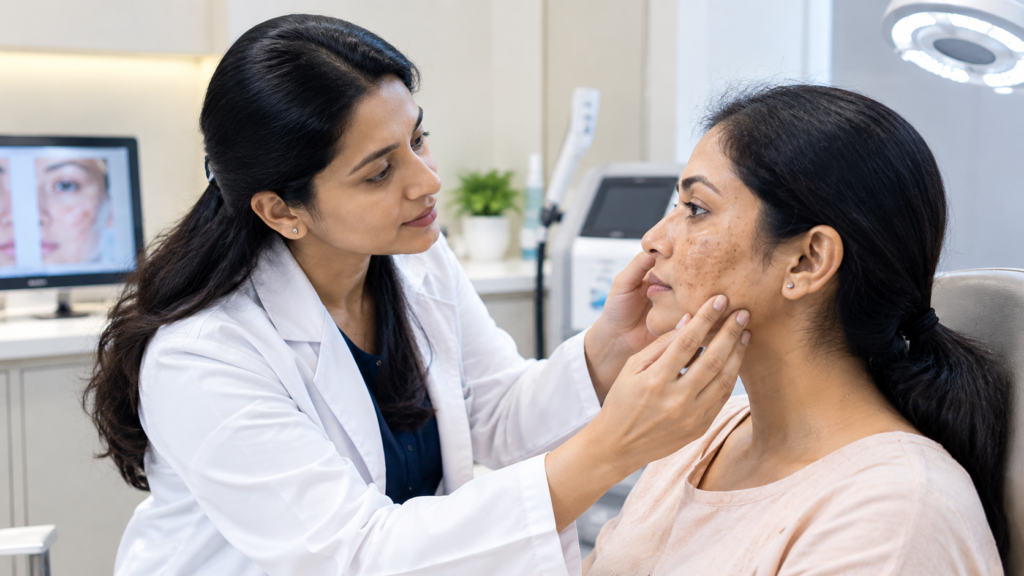
3. Treatment Areas & Body De-Tanning Capabilities
Sun tanning rarely affects the face alone. Daily commuting and outdoor activity leave uneven skin darkening across exposed body zones:
| Target Body Zone | Exposure Mechanism | Primary Clinical Approach | Average Session Requirement |
| Facial & Jawline | Daily direct sunlight, HEV blue light | Q-Switched Laser Toning + HydraFacial | 2 – 4 Sessions |
| Full Arms & Forearms | Driving, riding two-wheelers | Dermatological Body Peels + Laser Toning | 3 – 5 Sessions |
| Full Neck & Upper Back | Open collars, outdoor sun exposure | Glycolic/Lactic Body Peels + Microdermabrasion | 3 – 5 Sessions |
| Feet & Lower Legs | Open footwear, sun exposure | High-Fluence Body Peels + De-Tan Wraps | 4 – 6 Sessions |
4. Comparative Overview: Clinical De-Tanning vs. Salon D-Tan & Home Remedies
| Parameter | Clinical De-Tanning (Laser / Medical Peels) | Salon D-Tan Bleach Packs | Home Remedies (Lemon, Curd, Besan) |
| Target Depth | Basal epidermis & deep reticular dermis | Superficial hair bleaching only | Outer dead stratum corneum |
| Primary Mechanism | Photo-acoustic melanolysis & acid exfoliation | Chemical bleaching (Peroxide) | Mild mechanical friction |
| Safety Profile | US-FDA approved; administered by dermatologists | High risk of contact dermatitis & burns | Risk of citrus phytophotodermatitis |
| Durability of Results | Long-lasting structural melanin clearing | Short-lived (7–10 days) | Minimal to temporary |
| Impact on Barrier | Repairs and strengthens skin barrier | Disrupts pH, causes barrier dryness | Can cause micro-abrasions |
5. Cost Breakdown of Sun Tan Removal Treatment in Hyderabad
Pricing for clinical sun tan removal across top dermatological centers in Hyderabad depends on the target body area, selected technology, and total required sessions.
| Procedure / Modality | Target Treatment Zone | Estimated Cost Range per Session (INR) | Recommended Sessions |
| Specialist Dermatologist Consultation | Face & Body Assessment | ₹700 – ₹1,500 | Initial + follow-ups |
| Q-Switched Laser Toning | Full Face | ₹3,500 – ₹7,500 | 3 – 5 Sessions |
| Dermatological Facial Chemical Peel | Full Face | ₹2,500 – ₹4,500 | 3 – 5 Sessions |
| Signature HydraFacial De-Tan | Full Face & Neck | ₹4,500 – ₹8,500 | 2 – 4 Sessions |
| Body Chemical Peel (Arms or Upper Back) | Full Arms / Back | ₹5,500 – ₹12,000 | 3 – 5 Sessions |
| Full Body De-Tanning Combination | Face, Neck, Arms & Feet | ₹14,000 – ₹28,000 | 3 – 5 Sessions |
6. Local Environmental Triggers in Hyderabad & Post-Care Guidelines
Achieving and maintaining clear skin requires protecting your skin against specific environmental factors in Hyderabad:
Regional Climate & Environmental Drivers
- High Year-Round UV Index: Hyderabad’s geographical location results in high solar UV indices, especially during extended summer months. Continuous UVA exposure drives dark melanin synthesis even on cloudy days.
- Hard Borewell Water (High TDS): Tap water in expanding areas like Kondapur, Madhapur, and Gachibowli contains high calcium and magnesium levels. Washing sun-damaged skin with hard water leaves mineral residues that irritate the skin barrier and lock in post-sun hyperpigmentation. Solution: Use filtered or RO water for facial washing.
- Airborne PM2.5 Pollution: Heavy traffic dust along major corridors like High-Tension Line Road and Botanical Garden Road generates free radicals that cause oxidative stress, worsening dark spots and dullness.
7. Daily Skincare Protocol for Maintaining De-Tanned Skin
To preserve your treatment results, follow a structured daily skincare routine:
Morning Protocol (AM)
├── 1. Gentle Hydrating Cleanser (Non-soap, pH-balanced)
├── 2. Antioxidant Protection (10-15% L-Ascorbic Acid / Niacinamide Serum)
├── 3. Lightweight Barrier Moisturizer (Ceramides / Hyaluronic Acid)
└── 4. Broad-Spectrum Mineral Sunscreen (SPF 50+, PA++++ Tinted with Iron Oxides)

Evening Protocol (PM)
├── 1. Gentle Cleansing (Double-cleanse to remove sunscreen & pollution particles)
├── 2. Depigmenting Active (Azelaic Acid 10% / Alpha Arbutin 2% / Kojic Acid)
└── 3. Barrier Repair Gel-Cream
8. Frequently Asked Questions (FAQs)
1. What is the most effective Sun Tan Removal Treatment in Hyderabad?
The most effective approach is multi-modality clinical combination therapy. At Dr. Showrya Gadde Dermatology & Wellness, we combine Q-Switched Nd:YAG (1064nm) laser toning to shatter deep melanin deposits with dermatological chemical peels (Lactic/Glycolic/Mandelic) and Signature HydraFacials to shed tanned surface skin layers.
2. How much does clinical sun tan removal treatment cost in Hyderabad?
In Hyderabad, facial chemical peels range from ₹2,500 to ₹4,500 per session. Q-Switched Laser Toning for facial tan costs ₹3,500 to ₹7,500 per session. Full arms, neck, or back body de-tanning procedures using body peels or lasers range between ₹5,500 and ₹14,000 per session.
3. Why don’t home remedies or salon D-Tan facials clear deep sun tan?
Home remedies (like lemon or curd) and salon D-tan packs only affect superficial dead cells on the outer stratum corneum. Sun tanning causes accelerated melanogenesis deep in the basal epidermal layer and upper dermis. Clinical treatments utilize medical lasers and pharmaceutical acids to target and shatter deep melanin.
4. How many clinical sessions are required to completely remove sun tan?
Mild, fresh sun tanning can be cleared in 2 to 3 sessions. Deep, chronic, or stubborn body tan (accumulated over years) typically requires 4 to 6 sessions spaced 2 to 3 weeks apart for full skin tone restoration.
5. Is laser tan removal safe for dark Indian skin tones?
Yes, Q-Switched Nd:YAG 1064nm laser toning is the gold standard for South Asian skin (Fitzpatrick Types IV–VI). Its photo-acoustic mechanism targets melanin granules deep in the skin without burning or damaging surface cells, preventing post-inflammatory hyperpigmentation (PIH).
6. Can sun tan on exposed arms, hands, and feet be treated?
Yes. Dermatological body chemical peels, high-fluence Q-Switched laser toning, and micro-dermabrasion are specifically formulated and calibrated to treat thicker, sun-exposed skin on the arms, forearms, hands, feet, upper back, and neck.
7. Is there any pain or downtime associated with clinical de-tanning?
Most procedures involve zero social downtime. Q-Switched laser toning feels like a mild, warm tingling sensation, while chemical peels cause mild, temporary micro-flaking for 2 to 3 days that is easily managed with moisturizers.
8. What is the difference between a sunburn and a sun tan?
A sunburn is an acute inflammatory response caused by excessive UVB radiation, leading to red, painful, blistering, and peeling skin. A sun tan is an adaptive defense mechanism where melanocytes produce excess melanin to shield cell nuclei from UVA radiation.
9. How does Hyderabad’s climate accelerate sun tanning?
Hyderabad experiences high UV index levels year-round, peaking during extended summer months. Ambient solar UVA rays penetrate deep into the dermis, activating tyrosinase enzymes that drive continuous melanin synthesis even during routine daily commutes.
10. How does hard tap water in Hyderabad affect sun tanned skin?
Groundwater and municipal tap water in high-density areas contain high Total Dissolved Solids (TDS) like calcium and magnesium. These minerals leave a residue that disrupts the protective skin barrier, increasing skin sensitivity and locking in post-sun hyperpigmentation.
11. Can I go outdoors after receiving a clinical de-tanning session?
Yes, but strict sun shielding is required. You must apply a broad-spectrum mineral sunscreen (SPF 50+, PA++++) every 3 hours and wear protective physical clothing (such as wide-brimmed hats or full sleeves) to preserve treatment results.
12. Do chemical body peels thin the skin permanently?
No. Dermatological chemical peels gently exfoliate the dull, melanin-laden outer stratum corneum while stimulating cell turnover and collagen synthesis in the dermis below, actually making the skin healthier and more resilient.
13. What active ingredients help prevent sun tanning from returning?
Effective medical-grade ingredients include Niacinamide (4–5%), Alpha Arbutin, Kojic Acid, Azelaic Acid, L-Ascorbic Acid (Vitamin C), and Ferulic Acid, combined with daily mineral sunscreen.
14. What pre-procedure care is required before a tan removal treatment?
Avoid active physical scrubbing or bleaching 5 days prior. Discontinue strong exfoliating topicals (like Retinoids, Glycolic Acid, or Salicylic Acid) 3 days before your session, and keep the skin well-hydrated.
15. Why choose Dr. Showrya Gadde Dermatology & Wellness for sun tan removal?
Under the leadership of Dr. Showrya Gadde (MBBS, DNB – Dermatology), our clinic provides board-certified medical diagnosis, US-FDA approved Q-Switched laser technology, customized body peel formulations, and transparent, evidence-based care tailored to South Asian skin.
9. Schedule Your Diagnostic Assessment
Restoring a clear, even, and radiant skin tone requires precise clinical diagnosis and specialized dermatological care. If stubborn sun tanning, solar damage, or body discoloration is affecting your skin confidence, schedule a consultation with Dr. Showrya Gadde at Dr. Showrya Gadde Dermatology & Wellness in Jubilee Enclave, Kondapur, Hyderabad. A personalized evaluation will identify your exact pigment depth and help establish a safe, effective path to clear skin.