
Table of Contents
EV Charging Infrastructure Solutions Guide (2026): Hardware, Grid & SaaS
The global transition to electric mobility has transformed electric vehicle (EV) charging from a simple utility add-on into a critical, multi-billion-dollar infrastructure domain. Modern EV charging infrastructure solutions bridge heavy civil and electrical engineering, high-voltage power distribution, cloud backend software, grid load optimization, and interactive driver experiences.
Deploying scalable EV charging infrastructure requires navigating hardware selection, electrical transformer upgrades, utility interconnects, dynamic energy software, regulatory mandates, and long-term site maintenance. Whether you are a commercial real estate developer, corporate fleet operator, fuel retailer, municipality, or energy utility, establishing a robust infrastructure blueprint is essential to lower total cost of ownership (TCO) and ensure maximum uptime.
What are EV Charging Infrastructure Solutions?
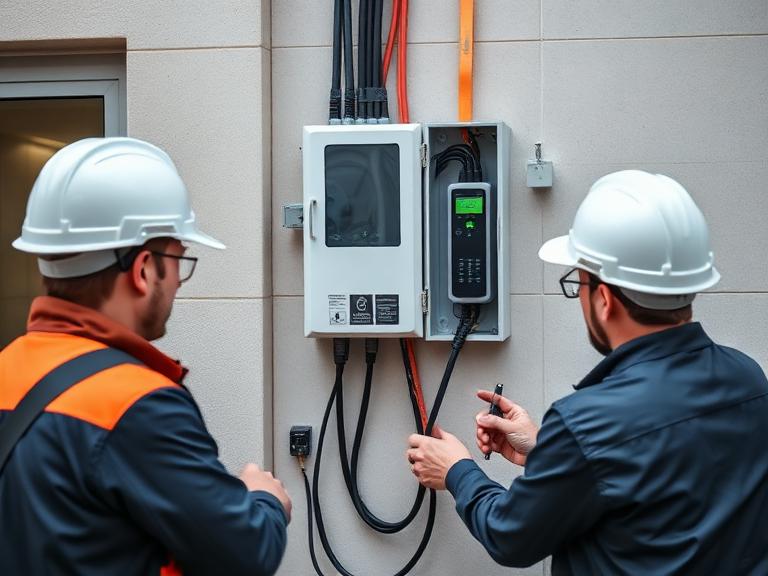
EV charging infrastructure solutions represent the end-to-end framework of physical hardware, electrical equipment, energy storage systems, networking software, and field operations required to deliver electrical power to electric passenger vehicles, commercial trucks, and public transit fleets.
Rather than viewing a charger as an isolated appliance, an enterprise infrastructure solution connects physical chargers to localized power distribution, utility grids, and cloud management software in real time.
+-----------------------------------------------------------------------------------+
|                            ELECTRIC VEHICLE DRIVER / FLEET                        |
|                     Passenger EVs  |  Delivery Vans  |  Heavy Trucks              |
+-----------------------------------------------------------------------------------+
                                          |
                                          | (Plug & Charge ISO 15118 / RFID / App)
                                          v
+-----------------------------------------------------------------------------------+
|                        HARDWARE CHARGING EQUIPMENT (EVSE)                         |
|   +-----------------------+   +----------------------+   +--------------------+   |
|   | Level 2 AC (7–22 kW)  |   | DC Fast (50–180 kW)  |   | Ultra-Fast / HPC   |   |
|   | Destination / Fleet   |   | Retail & Commercial  |   | (250–480 kW + MCS) |   |
|   +-----------------------+   +----------------------+   +--------------------+   |
+-----------------------------------------------------------------------------------+
                                          |
                                          | (OCPP 1.6 / 2.0.1 / 2.1 Communication)
                                          v
+-----------------------------------------------------------------------------------+
|                   ENERGY MANAGEMENT & CPMS CLOUD SOFTWARE                         |
|   +-----------------------+   +----------------------+   +--------------------+   |
|   | Dynamic Load Balance  |   | Automated Billing    |   | Remote Diagnostics |   |
|   | & Peak Shaving        |   | & Payment Gateways   |   | & Fault Handling   |   |
|   +-----------------------+   +----------------------+   +--------------------+   |
+-----------------------------------------------------------------------------------+
                                          |
                                          | (OCSP / OSCP Smart Grid Interfaces)
                                          v
+-----------------------------------------------------------------------------------+
|                     SITE POWER & GRID INTERCONNECTION                             |
|       Utility Transformer | On-Site BESS Storage | Solar PV Integration       |
+-----------------------------------------------------------------------------------+
Core Pillars of EV Charging Infrastructure Solutions
Deploying enterprise-grade charging infrastructure requires five interconnected technical and operational layers:
1. High-Voltage Electrical Infrastructure & Grid Interconnection
The foundation of any charging installation lies in its site electrical capacity. High-power charging installations, particularly DC Fast Charging (DCFC) hubs and Megawatt Charging Systems (MCS) for commercial fleets, demand substantial power grid capacity.
- Transformer Sizing & Switchgear: Upgrading dedicated medium-voltage (MV) site transformers, switchboards, panelboards, and circuit breakers to handle continuous high-ampere power loads.
- Trenching & Conduit Infrastructure: Executing civil engineering works, directional boring, concrete pads, bollard installation, and ADA/accessibility-compliant site layouts.
- Utility Service Interconnects: Coordinating with local distribution system operators (DSOs) for grid capacity allocation, interconnection studies, and line extension approvals.
2. Multi-Level EVSE Charging Hardware
Selecting the proper Electric Vehicle Supply Equipment (EVSE) depends directly on target driver dwell times, vehicle battery capacities, and daily utilization patterns:
- AC Level 2 Chargers (7 kW – 22 kW): Best suited for long-dwell destinations (workplaces, multi-family residential communities, overnight fleet depots, and hotel garages).
- DC Fast Chargers (50 kW – 180 kW): Designed for medium-dwell retail locations, shopping centers, commercial parking structures, and last-mile delivery fleet hubs.
- High-Power Chargers / Ultra-Fast HPC (250 kW – 480 kW+): Engineered for highway corridors, corridor logistics depots, and public fast-charging hubs requiring 10-to-20-minute charge sessions.
- Megawatt Charging Systems (MCS – Up to 1.2 MW–3.75 MW): Purpose-built for heavy-duty Class 8 electric trucks, buses, and marine transport requiring rapid megawatt-level energy transfer.
3. Smart Energy Management & Grid Balancing Software
Without intelligent power orchestration, site charging operations risk triggering immense peak demand surcharges or exceeding transformer ratings.
- Dynamic Load Management (DLM): Automatically monitoring total site power capacity in real time and throttling individual charger power output based on active vehicle counts and battery charging curves.
- Peak Shaving: Throttling power output during peak electricity tariff windows to protect the site from excessive utility demand charges.
- BESS & Solar Integration: Incorporating Battery Energy Storage Systems (BESS) and microgrids to buffer grid draw, storing solar energy during off-peak hours and discharging it during high-speed charging sessions.
                 AVAILABLE UTILITY SITE CAPACITY: 400 kW
                                    |
      +-----------------------------+-----------------------------+
      |                             |                             |
      v                             v                             v
[VEHICLE 1: DCFC]             [VEHICLE 2: DCFC]             [VEHICLE 3: DCFC]
SoC: 10% (Initial Draw)       SoC: 45% (Mid Draw)           SoC: 80% (Tapered)
Requested: 200 kW             Requested: 150 kW             Requested: 50 kW
Allocated: 200 kW             Allocated: 150 kW             Allocated: 50 kW
(Full Rate)                   (Full Rate)                   (Battery Tapering)
4. Open-Protocol Cloud Management (CPMS)
Cloud-native Charge Point Management Systems serve as the central operating software for charging infrastructure networks.
- Remote Telemetry & Self-Healing: Continuously tracking voltage, current, internal temperature, and connector readiness while issuing automated soft/hard reboots when software freezes occur.
- Dynamic Tariff Configuration: Setting complex pricing structures, including per-kWh energy tariffs, duration-based pricing, time-of-use (ToU) utility alignment, and idle penalty fees.
- Multi-Modal Payment Systems: Supporting direct credit card readers (Nayax, Worldline), mobile guest web portals via QR codes, contactless mobile wallets, and RFID access.
5. Preventive Operations, Maintenance, and SLAs
Maintaining hardware reliability requires structured field operations:
- Preventive Site Audits: Regular cleaning of air cooling filters on liquid-cooled high-power DC chargers, checking cable isolation, testing ground fault interruptors, and inspecting connector pins.
- SLA-Backed Field Engineering: Utilizing regional field technicians to deliver guaranteed 24- to 48-hour response times for physical component repairs, screen replacements, and cable overhauls.
Critical Technical Standards and Industry Protocols
Enterprise EV charging infrastructure depends on open, standardized communication layers to prevent vendor lock-in and deliver seamless driver access:
| Protocol / Standard | Full Name | Operational Role in Infrastructure |
| OCPP 2.0.1 / 2.1 | Open Charge Point Protocol | Advanced open communication between chargers and cloud backends, enabling enhanced cybersecurity, remote device management, smart charging, and display customization. |
| OCPI 2.2.1 / 2.3 | Open Charge Point Interface | Peer-to-peer or hub-based protocol enabling cross-network roaming, public location data sharing, real-time status updates, and session financial settlement. |
| ISO 15118 (-2 / -20) | Road Vehicles – V2G Communication | Universal standard enabling Plug & Charge, bidirectional power transfer (V2G/V2H), and encrypted vehicle-to-charger digital certificate exchange. |
| OSCP / OCSP | Open Smart Charging Protocol | Communicates localized grid constraints and energy availability limits between distribution grid operators (DSOs) and charging station backends. |
| NACS / SAE J3400 | North American Charging Standard | Standardized physical connector geometry across North America for both AC and DC fast charging, streamlining vehicle compatibility. |
Strategic Deployment Models & Infrastructure Use Cases
Infrastructure design varies substantially across business applications:
1. Commercial Real Estate, Retail & Hospitality
- Primary Focus: Customer acquisition, increased dwell times, and modern property amenities.
- Configuration: Mixed installations combining 11–22 kW AC Level 2 units for long-dwell visitors with 50–150 kW DC fast chargers for quick-turn shoppers.
- Revenue Strategy: Public usage fees, loyalty app integrations, and white-label SaaS hosting.
2. Commercial Fleets & Logistics Depots
- Primary Focus: Fleet readiness guarantees, low cost per mile, and reduced peak demand costs.
- Configuration: High-power DC fast chargers (150–350 kW) and Megawatt Charging Systems (MCS) tied to automated fleet scheduling software.
- Revenue Strategy: Charging-as-a-Service (CaaS) subscription models with long-term energy contracts.
3. Highway Charging Corridors & Fuel Retailers
- Primary Focus: High throughput, rapid charge turnaround times, and 99%+ operational uptime.
- Configuration: Modular Ultra-Fast HPC hubs (250–480 kW) equipped with liquid-cooled cables, integrated BESS storage, and multi-dispenser power sharing.
- Revenue Strategy: Direct electricity resale ($\text{kWh}$), idle fees, and integrated convenience store retail sales.
Business & Capital Models: Financing Your Infrastructure
Deploying EV charging infrastructure requires choosing an appropriate capital investment model:
- Capital Expenditure (CapEx) Ownership: The site host purchases, owns, and operates the hardware and civil infrastructure directly, retaining 100% of charging session revenues while assuming long-term maintenance responsibility.
- Charging-as-a-Service (CaaS): A turn-key OpEx model where a third-party infrastructure provider finances, installs, operates, and maintains the entire site in exchange for a monthly service fee or revenue-share agreement.
- Turnkey CPO Joint Ventures: Infrastructure operators lease land or parking spaces from site hosts, providing free installation and maintenance while paying the property owner a fixed lease or percentage of net charging revenue.
Frequently Asked Questions (FAQ)
Q1: What are EV charging infrastructure solutions?
EV charging infrastructure solutions represent the turnkey hardware, electrical grid connections, software management, and operational services required to build and run electric vehicle charging locations. This covers everything from civil trenching and transformer installations to cloud CPMS backends, automated payment gateways, and SLA maintenance.
Q2: What is the difference between AC Level 2 and DC Fast Charging infrastructure?
- AC Level 2 (7 kW – 22 kW): Supplies alternating current directly to the vehicle’s internal onboard charger. It requires lower electrical site capacity, making it cost-effective for overnight or long-dwell charging locations (4 to 8 hours).
- DC Fast Charging (50 kW – 480 kW+): Converts AC power to direct current within a specialized external power cabinet, bypassing the vehicle’s onboard charger to feed energy directly to the battery. This delivers rapid charge times (15 to 30 minutes) for high-turnover locations.
Q3: Why is dynamic load management essential for enterprise EV infrastructure?
Dynamic Load Management (DLM) monitors site electrical capacity in real time and automatically balances power distribution across active chargers. This prevents electrical panel overloads, avoids costly utility grid transformer upgrades, and protects the site from expensive peak demand fees.
Q4: What is Charging-as-a-Service (CaaS)?
Charging-as-a-Service is an Operational Expenditure (OpEx) model where an enterprise hires a third-party infrastructure vendor to design, install, finance, and operate the site. The site host pays a predictable monthly subscription fee or engages in a revenue-share model, eliminating large upfront capital requirements.
Q5: What communication standards should modern charging infrastructure support?
Modern infrastructure must implement open standards:
- OCPP (2.0.1 / 2.1): Controls hardware-to-cloud communications, device security, and diagnostics.
- OCPI (2.2.1 / 2.3): Enables network roaming and location data publishing.
- ISO 15118: Enables automated Plug & Charge and bidirectional energy flow (V2G).
- PCI DSS: Secures card payment transaction data.
Q6: What is Plug & Charge (ISO 15118)?
Plug & Charge is an automated protocol that allows an EV to communicate directly with a compatible charger as soon as the cable is connected. Cryptographic certificates automatically authenticate the vehicle and process session payment without requiring an RFID tag, mobile app, or credit card swipe.
Q7: How do battery energy storage systems (BESS) complement EV charging stations?
On-site BESS units store energy during low-cost utility periods or from solar generation and discharge high power during peak fast-charging sessions. This buffers the local utility grid, caps demand spikes, and enables ultra-fast charging even at sites with limited transformer capacity.
Q8: What electrical utility upgrades are required for DC Fast Chargers?
Installing high-power DC fast chargers typically requires a 480V 3-phase electrical service connection, dedicated step-down transformers, upgraded switchgear panels, heavy-gauge underground electrical conduit, and utility interconnection approval.
Q9: How do site hosts generate revenue from EV charging infrastructure?
Site hosts generate revenue through several mechanisms:
- Direct energy billing per kilowatt-hour ($\text{kWh}$) consumed.
- Duration-based fees per minute of charging.
- Time-of-use (ToU) utility tariff adjustments.
- Post-session idle surcharges that encourage prompt vehicle relocation.
- Indirect commercial revenue from increased driver dwell time and store visits.
Q10: What is the Megawatt Charging System (MCS)?
The Megawatt Charging System (MCS) is an ultra-high-power charging standard engineered for heavy-duty commercial transportation, including Class 8 trucks, electric transit buses, and logistics fleets. MCS supports current levels up to 3,000 amps and power levels up to 3.75 MW, enabling rapid replenishment of massive commercial battery packs.
Q11: What is EV network roaming?
EV network roaming connects different charging network management backends using the OCPI protocol. It allows drivers to discover, access, and pay for charging across different operator networks using a single app or membership credential.
Q12: What preventive maintenance is required for fast-charging infrastructure?
Routine maintenance includes cleaning air intake filters on high-power power cabinets, checking liquid-cooling systems, inspecting heavy-duty cables and connector pins for physical wear, testing ground-fault breakers, and checking card readers.
Q13: How do government regulations impact EV charging infrastructure compliance?
Regulatory mandates—such as the EU’s Alternative Fuels Infrastructure Regulation (AFIR) and the US National Electric Vehicle Infrastructure (NEVI) program—require public fast-charging sites to provide ad-hoc credit card payment options, transparent pricing, minimum 97% operational uptime, open data feeds, and open OCPP software integration.
Q14: How long does it take to deploy a commercial EV charging site?
Timeline depends on infrastructure scale:
- AC Level 2 Sites: Typically require 4 to 8 weeks for electrical permitting and installation.
- DC Fast-Charging Hubs: Take 6 to 18 months due to grid capacity interconnection studies, transformer manufacturing lead times, civil trenching, and municipal approvals.
Q15: Can an open CPMS manage multi-vendor charging hardware?
Yes. An open, OCPP-compliant Charge Point Management System can control chargers from multiple hardware vendors through a single software backend, eliminating proprietary hardware lock-in and streamlining future site additions.
Step-by-Step Infrastructure Deployment Roadmap
+-----------------------------------------------------------------------------------+
| STEP 1: FEASIBILITY, SITE AUDIT & GRID INTERCONNECT STUDY                        |
| - Evaluate site transformer capacity, panel limits, and daily vehicle traffic.     |
| - File interconnection request with local Distribution System Operator (DSO).      |
+-----------------------------------------------------------------------------------+
                                          |
                                          v
+-----------------------------------------------------------------------------------+
| STEP 2: CIVIL & ELECTRICAL ENGINEERING DESIGN                                     |
| - Draft ADA-compliant site layouts, trenching plans, and switchgear specs.        |
| - Procure OCPP-compliant AC/DC chargers and on-site BESS storage units.           |
+-----------------------------------------------------------------------------------+
                                          |
                                          v
+-----------------------------------------------------------------------------------+
| STEP 3: CIVIL CONSTRUCTION, TRENCHING & EQUIPMENT INSTALLATION                    |
| - Complete concrete pad pouring, conduit pulling, switchgear, and transformer set.|
| - Mount charging dispensers and establish hardwired network connectivity.          |
+-----------------------------------------------------------------------------------+
                                          |
                                          v
+-----------------------------------------------------------------------------------+
| STEP 4: CPMS CLOUD PROVISIONING & SMART ENERGY CONFIGURATION                      |
| - Provision chargers onto cloud backend via OCPP 2.0.1.                           |
| - Configure Dynamic Load Management (DLM) limits and payment gateways.            |
+-----------------------------------------------------------------------------------+
                                          |
                                          v
+-----------------------------------------------------------------------------------+
| STEP 5: ROAMING PUBLISHING & SLA FIELD MAINTENANCE DEPLOYMENT                    |
| - Publish station endpoints to OCPI roaming hubs and navigation databases.         |
| - Activate 24/7 telemetry monitoring and SLA field dispatch contracts.            |
+-----------------------------------------------------------------------------------+
Adopting an open-protocol, software-driven strategy for EV charging infrastructure solutions ensures future-proof adaptability, protects against grid constraints, delivers high network uptime, and guarantees a smooth charging experience for electric vehicle operators.